Chapter 03
Buying a home, step by step
Most of a purchase is procedure rather than negotiation. Knowing the order of the stages makes it clear which parts can move and which simply take the time they take.
A residential purchase looks complicated from inside it because several processes run at once and none of them is visible to the buyer. Laid out in order it is a short list. The vocabulary differs between jurisdictions, and the two systems most readers will meet are described here side by side: in England and Wales the binding moment is exchange of contracts, in much of the United States it is the signing of a purchase agreement with contingencies, which binds earlier but with defined escape routes.
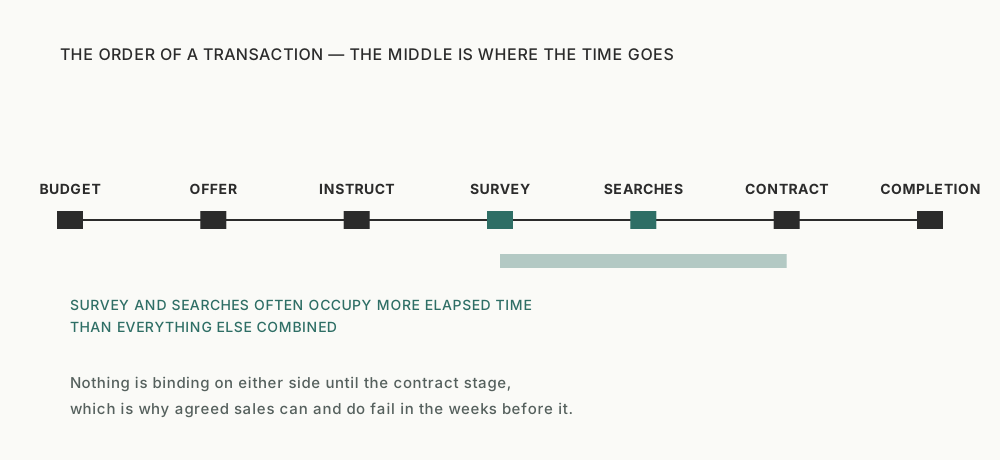
- Establish what the budget actually isNot the maximum a lender will advance, which is a different and larger number, but the purchase price plus the costs that sit on top of it: transfer duty or tax, legal fees, survey or inspection fees, lender and broker charges, removals, and the repairs that any older building will require in its first year. These typically add a meaningful percentage to the headline price, and they are almost never financed.
- Obtain a decision in principleA lender's provisional indication of what it would lend, based on stated income and a soft credit check. It is not a mortgage offer and it commits nobody, but it establishes a realistic ceiling and it is what a seller will ask for as evidence that an offer is deliverable. In American practice the equivalent is a pre-approval letter.
- Search, and view with a methodViewing is easy to do badly. What is worth recording on each visit is the structural and situational information that photographs cannot carry: orientation and where the light falls at that hour, noise, mobile signal, water pressure, the age and condition of the roof covering and the windows, evidence of damp at skirting level, the condition of neighbouring property, and where the parking actually happens in the evening.
- Make an offerAn offer is a position, not a promise, and in England and Wales it is not binding on either side. It is usually accompanied by information about how the purchase would be funded and whether the buyer has a property to sell, because a seller is choosing between offers on certainty as well as on amount. Where the buyer's position is unusually secure, that security is itself worth something at the negotiating table.
- Instruct a conveyancer and a lenderOnce an offer is accepted the file moves to professionals. The conveyancer or attorney begins title work and searches; the mortgage application converts from a decision in principle to a full application, which involves documentary evidence of income and a valuation of the property carried out for the lender's benefit rather than the buyer's.
- Commission an inspectionThe lender's valuation is not a survey. A separate inspection, at whichever level suits the age and construction of the building, is what tells the buyer about the condition of the thing being bought. This is the stage most often skipped and most often regretted.
- Wait through searches and enquiriesTitle, local authority, drainage and environmental searches are ordered and returned; enquiries are raised on whatever they reveal and answered by the seller's side. This stage is largely outside anyone's control and is where most of the elapsed weeks accumulate. Very little happens visibly while a great deal happens on paper.
- Reach the binding pointIn England and Wales this is exchange of contracts: a completion date is fixed, a deposit is paid, and neither side can withdraw without serious financial consequence. In the American system the contract is signed earlier and the buyer's protection comes from contingencies for financing, inspection and appraisal, which fall away one by one as they are satisfied.
- Complete, and registerFunds move, keys are released and the transfer is registered. Registration lags completion, sometimes by months, which is one reason public price records describe the recent past rather than the present.
Where purchases go wrong
Purchases that fail rarely fail because of a dramatic discovery. They fail because of the gap between agreement and binding commitment. In that gap somebody's circumstances change, a valuation comes in below the agreed price so the loan shrinks, an inspection finds work whose cost the two sides cannot agree to share, a link in the chain breaks two moves away, or one party simply receives a better offer.
The structural lesson is that in a system where nothing binds until late, speed is protective. Every week between agreement and the binding point is a week in which the transaction is exposed, which is why chain-free buyers and prepared sellers are valued out of proportion to the money involved.